Visualizing Venice
S. Maria della Carità, S. Agnese, and the Gesuati, three insulae make one
A museum’s origin and transformation
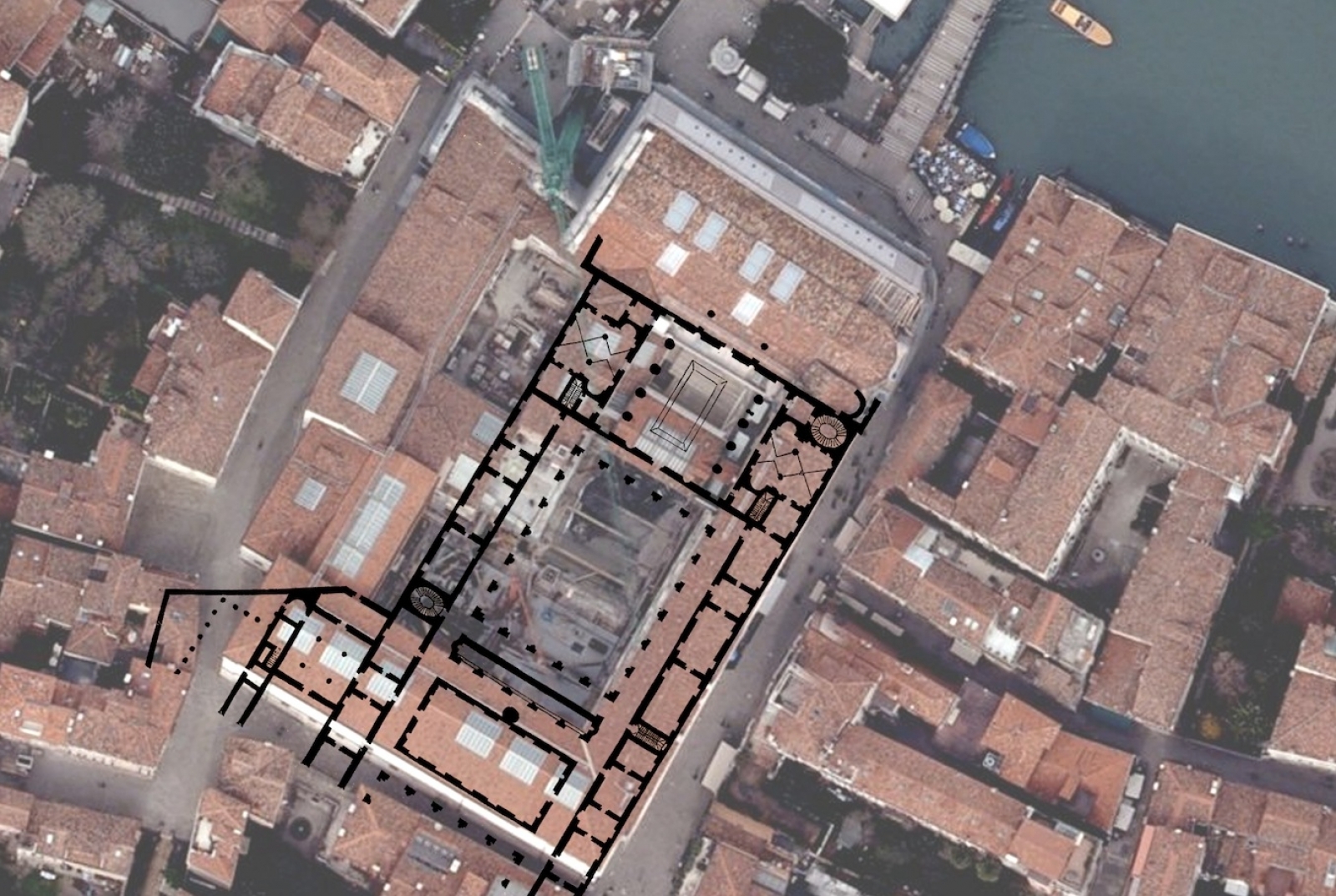
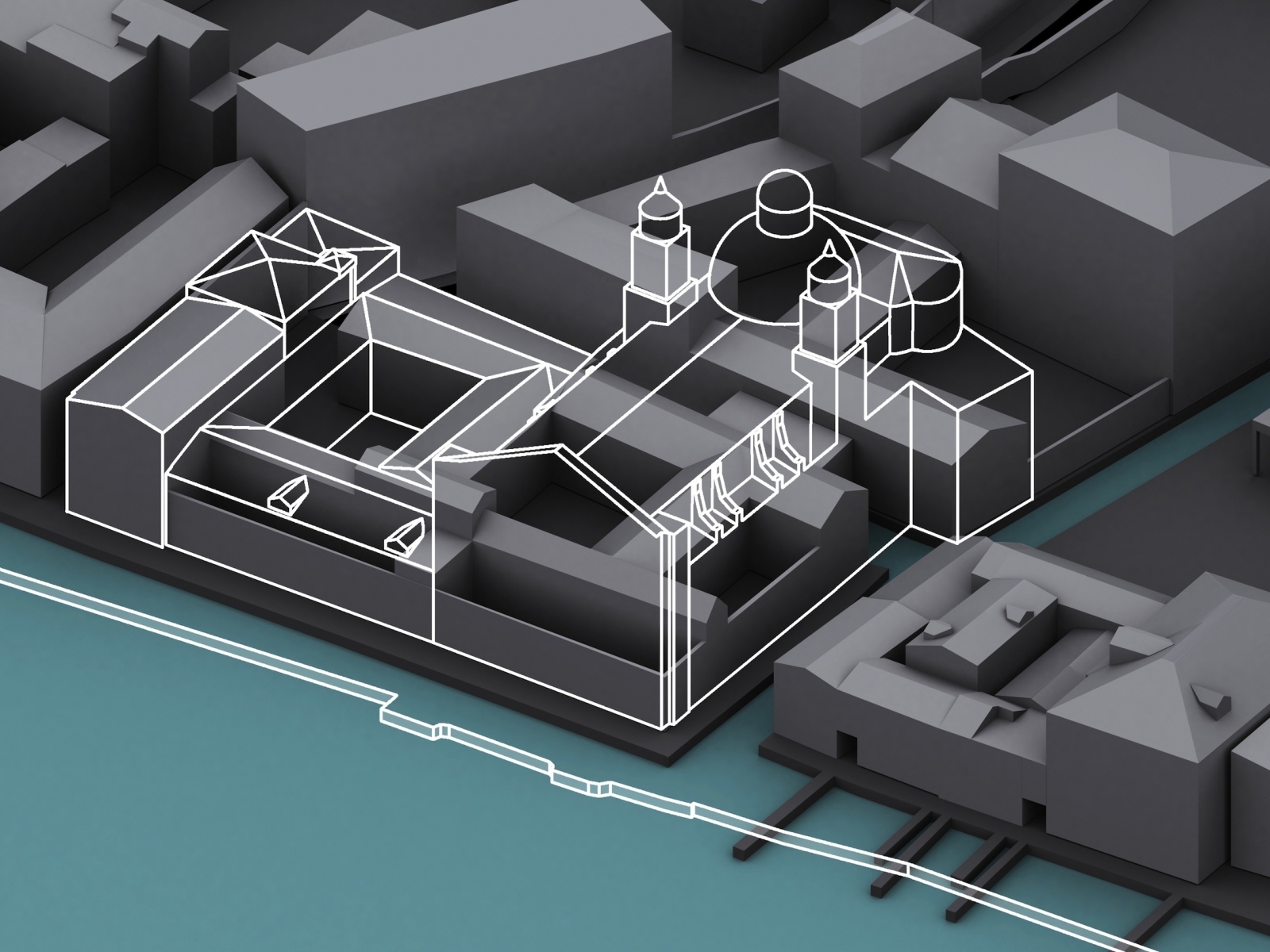
Located at the foot of the Accademia bridge and circumscribed by the Grand Canal, the canal of the Giudecca, and the rii of S. Trovaso and S. Vio, the insula of Accademia is best known today as the site of the Gallerie dell’Accademia. It took its present form in the nineteenth century through the aggregation of three smaller insulae—S. Maria della Carità, S. Agnese, and the Gesuati—, whose forms, in turn, date back to the sixteenth century, the period in which this cantiere opens. The slow and gradual process that unified these insulae linked, by land, the various building complexes they housed—the church and Scuola Grande di S. Maria della Carità and the convent of the Lateran Canons; the Romanesque church of S. Agnese; the Dominican complex of the Gesuati, and the fifteenth-century church of S. Maria della Visitazione.
After the Napoleonic suppression of the Italian religious orders (1806), the church and convent of the Lateran Canons (devoted to the Rule of St. Augustine) and the adjacent school (a secular institution) fell under a broad, typically nineteenth-century urban strategy aimed at concentrating specific collective uses in deconsecrated buildings.
Over the course of the next 150 years, these structures were readapted and redesigned to house the Accademia di Belle Arti, the space of which had to accommodate both educational and museum use.
The Gallerie dell’Accademia now occupy a large complex made up of several buildings that—despite having shared the name S. Maria della Carità—originally housed quite different institutions with quite different functions.
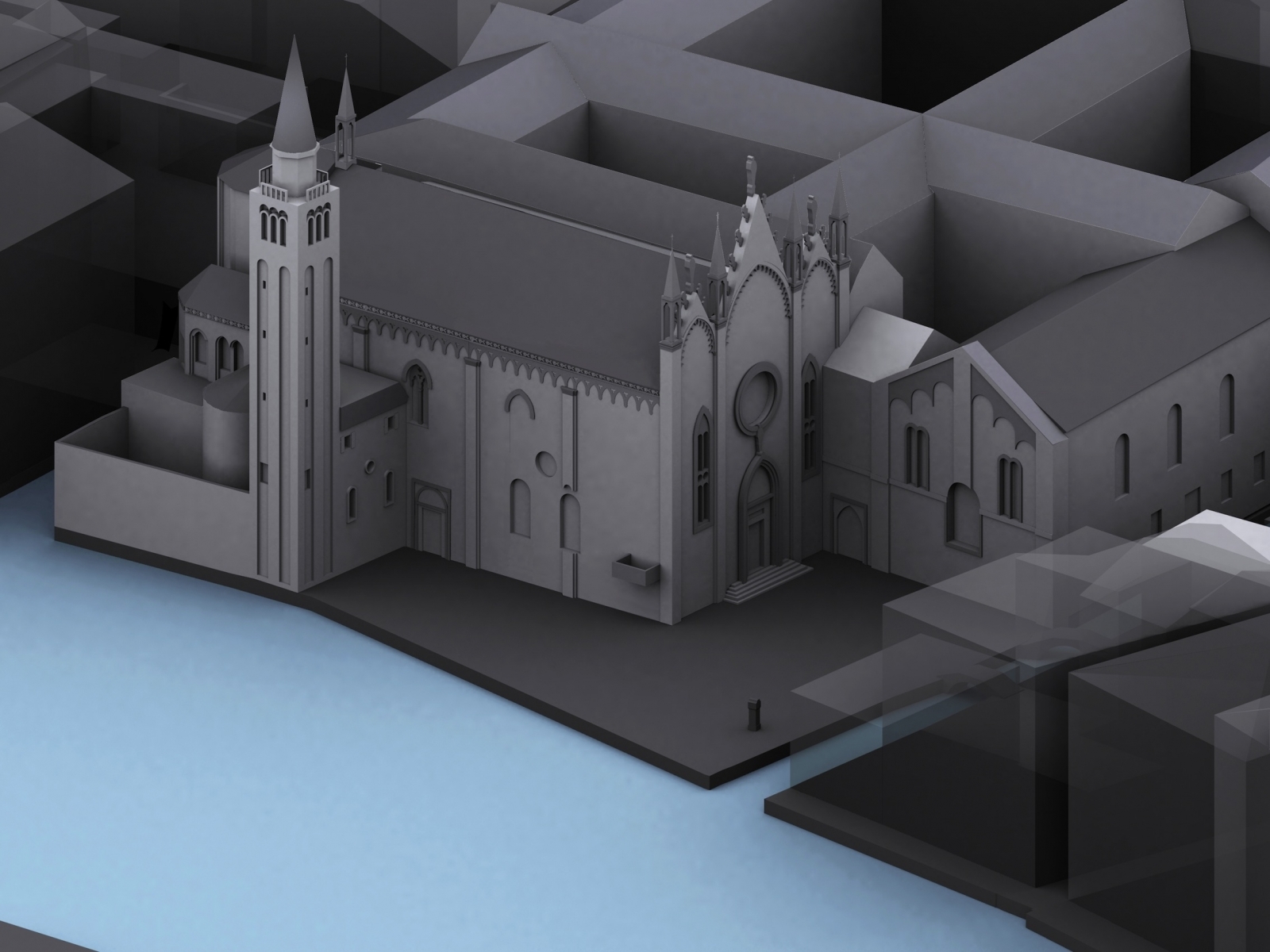
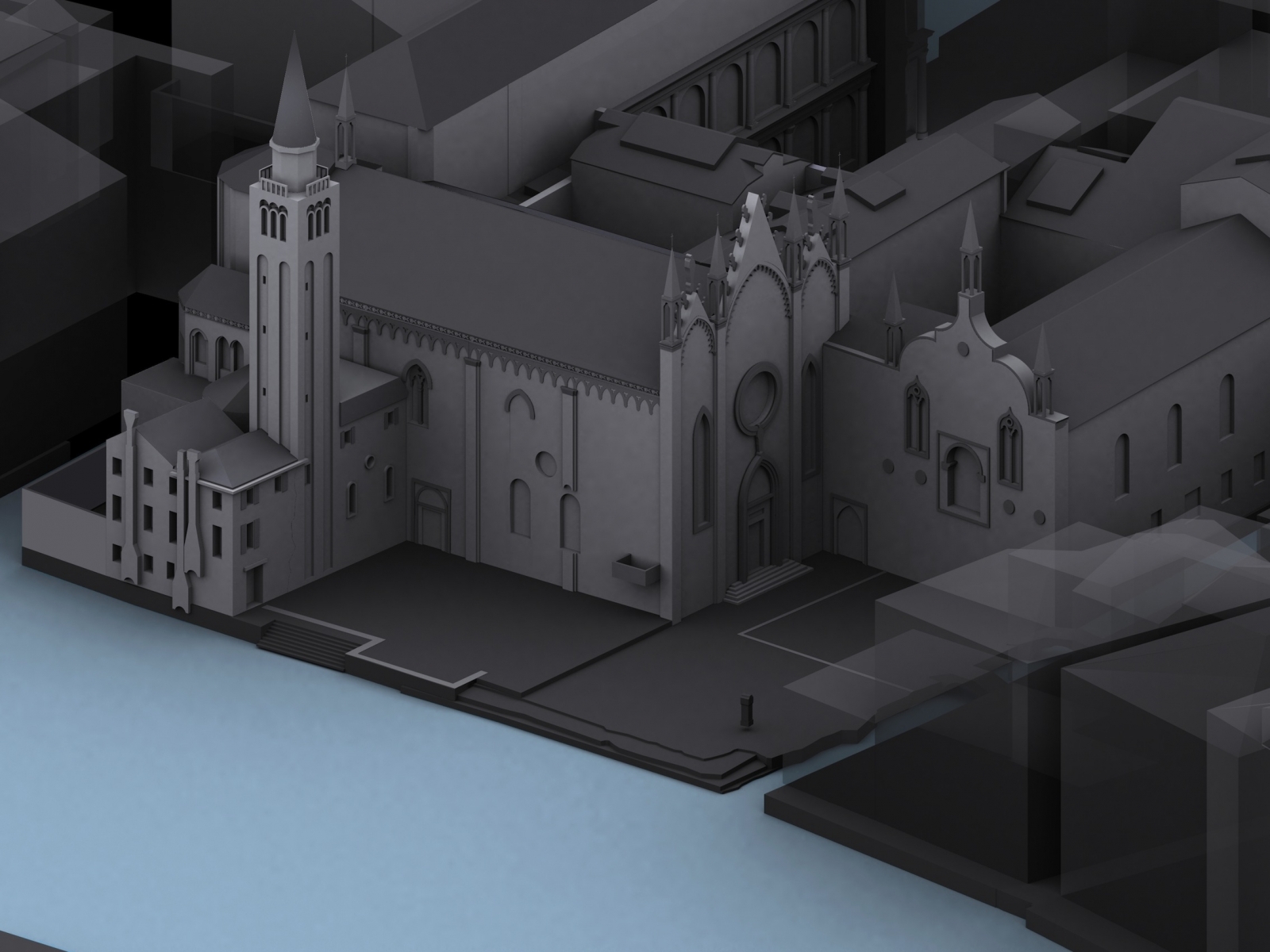
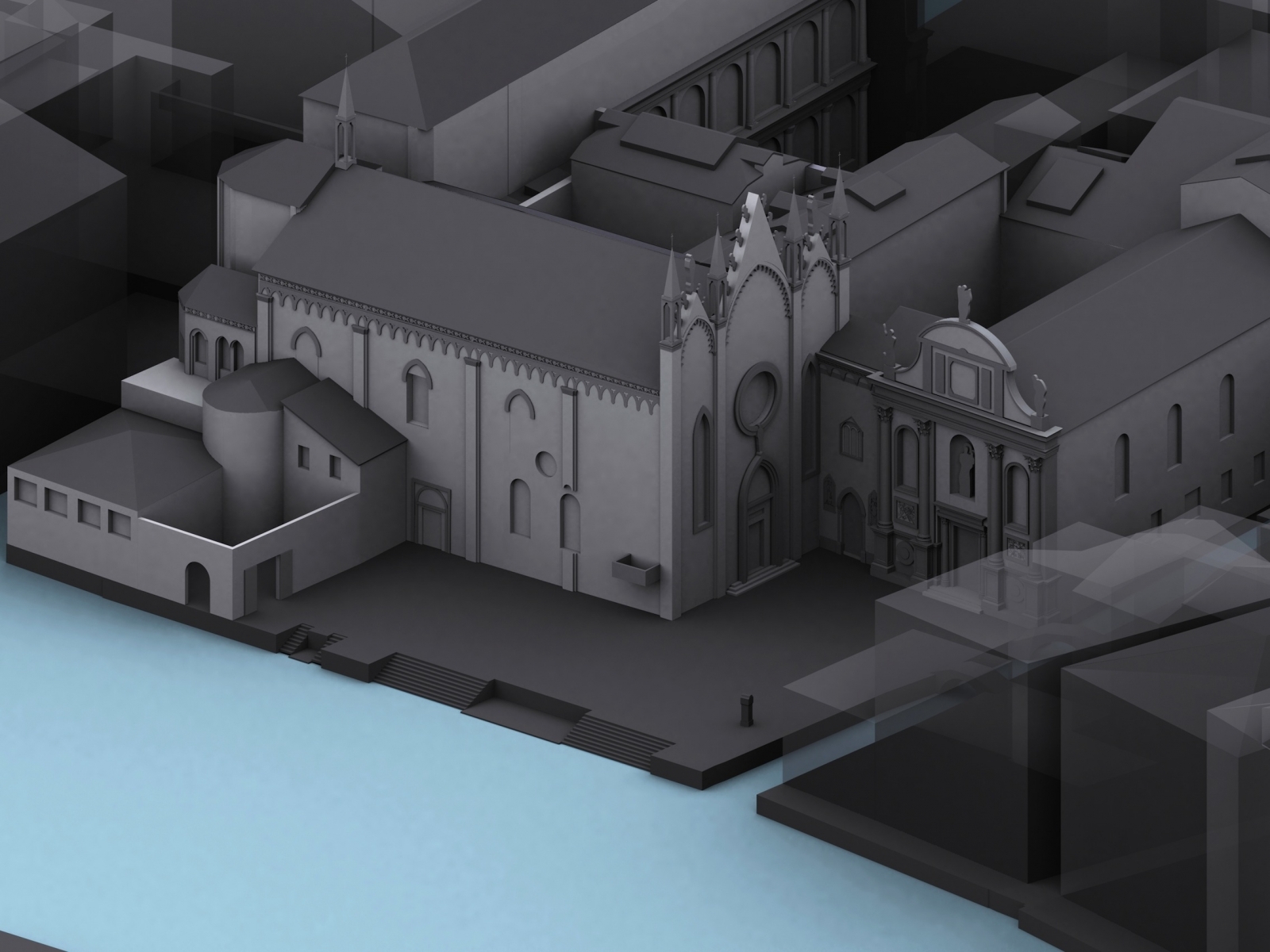
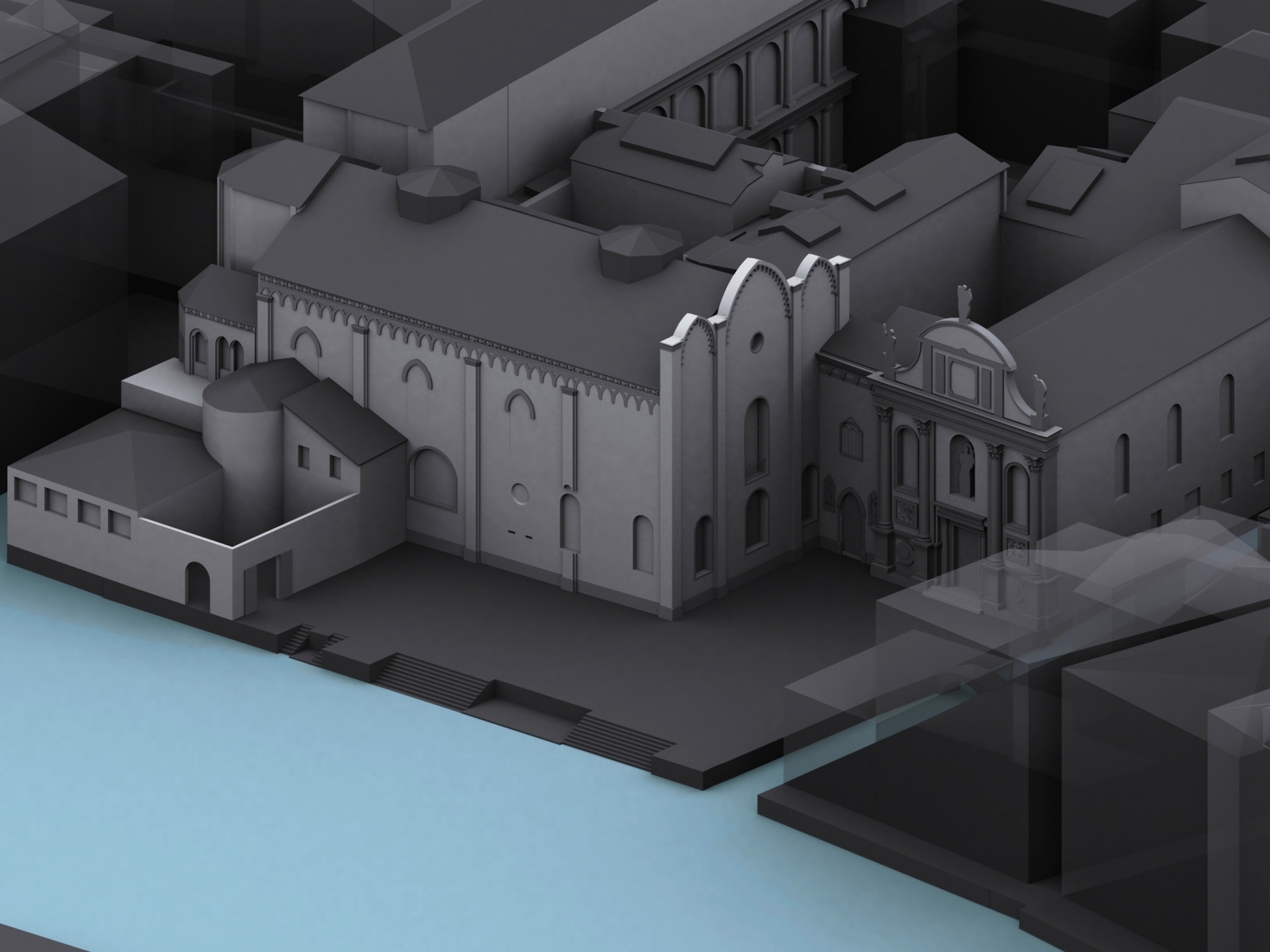
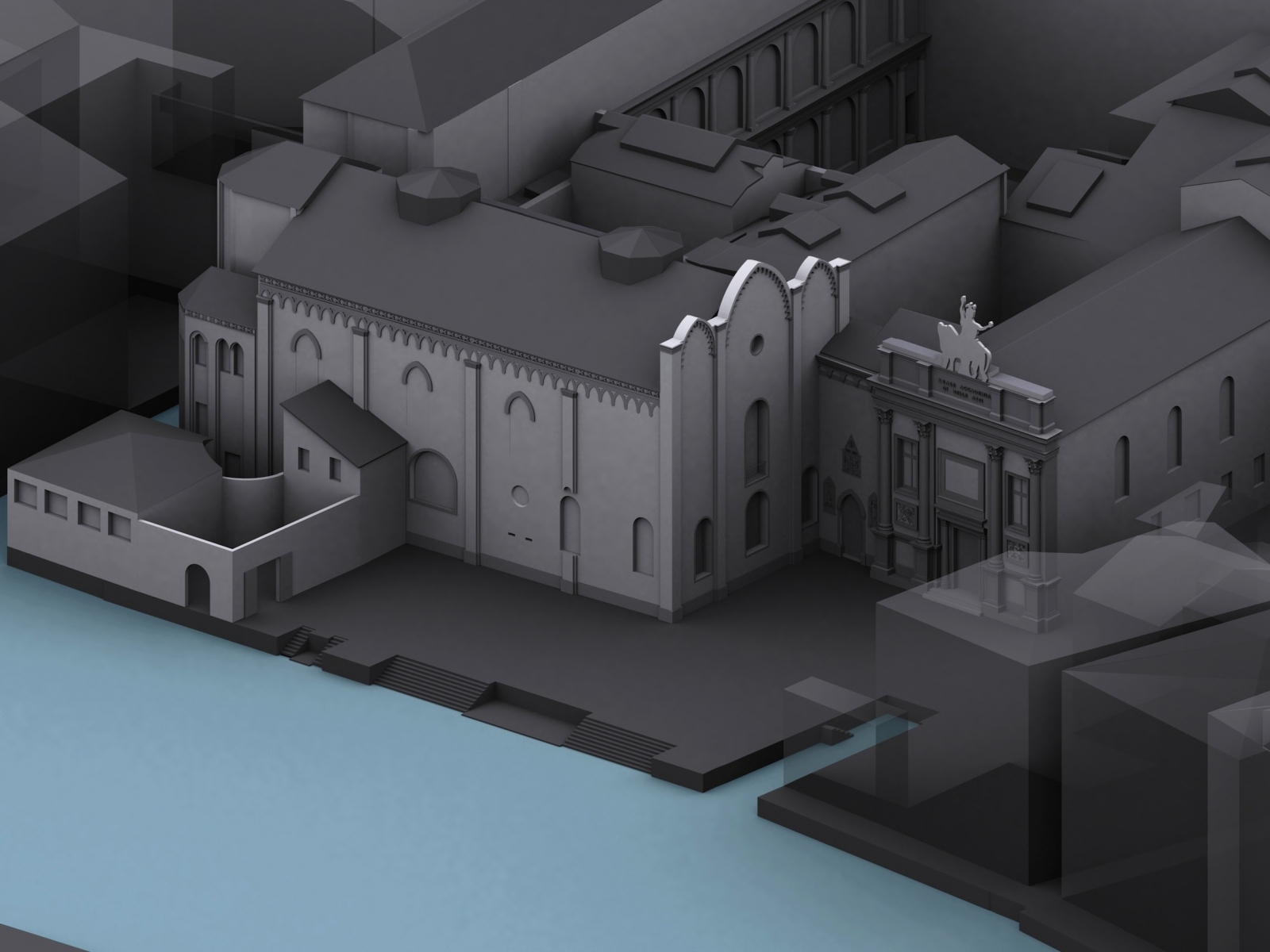
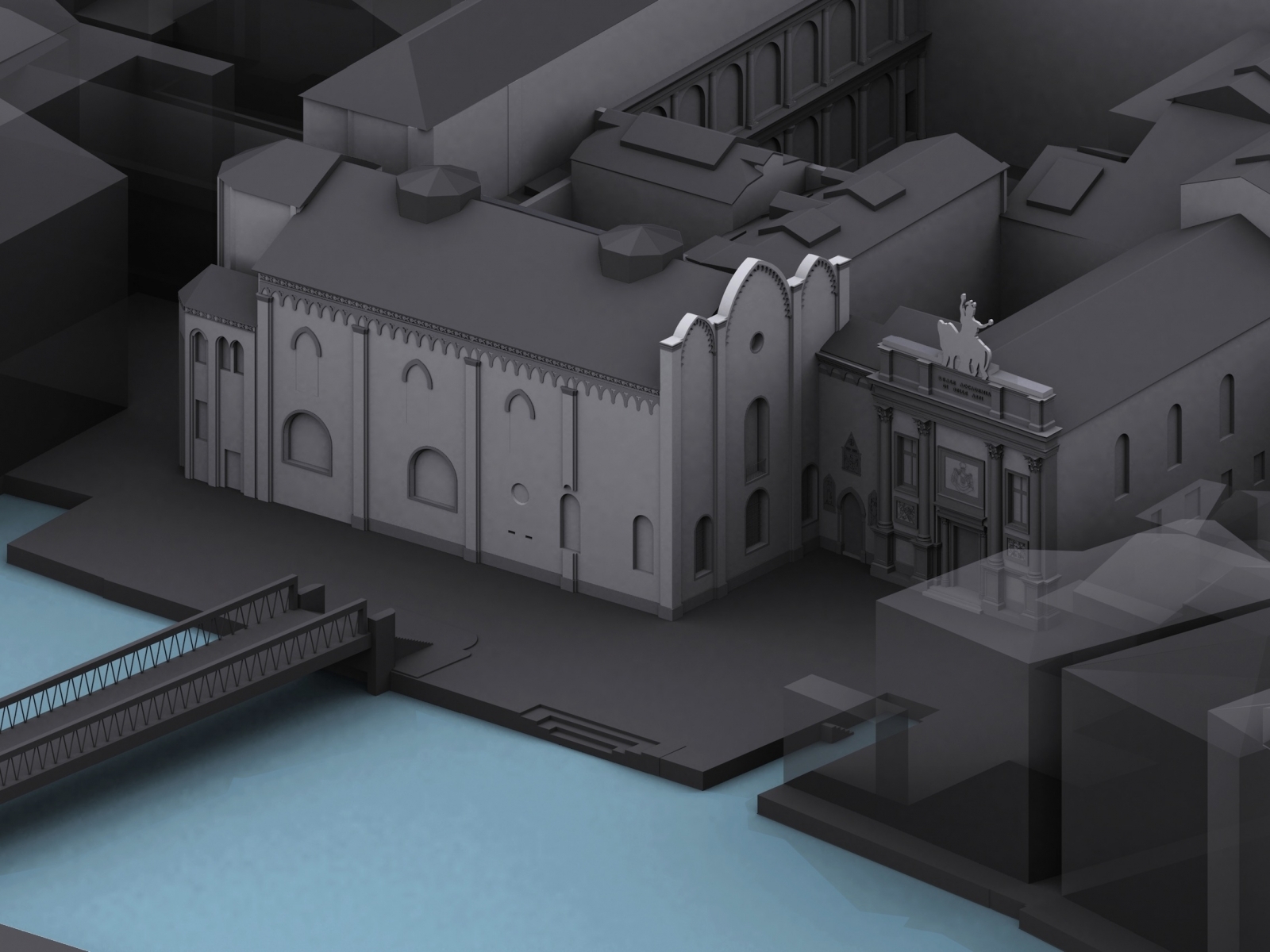
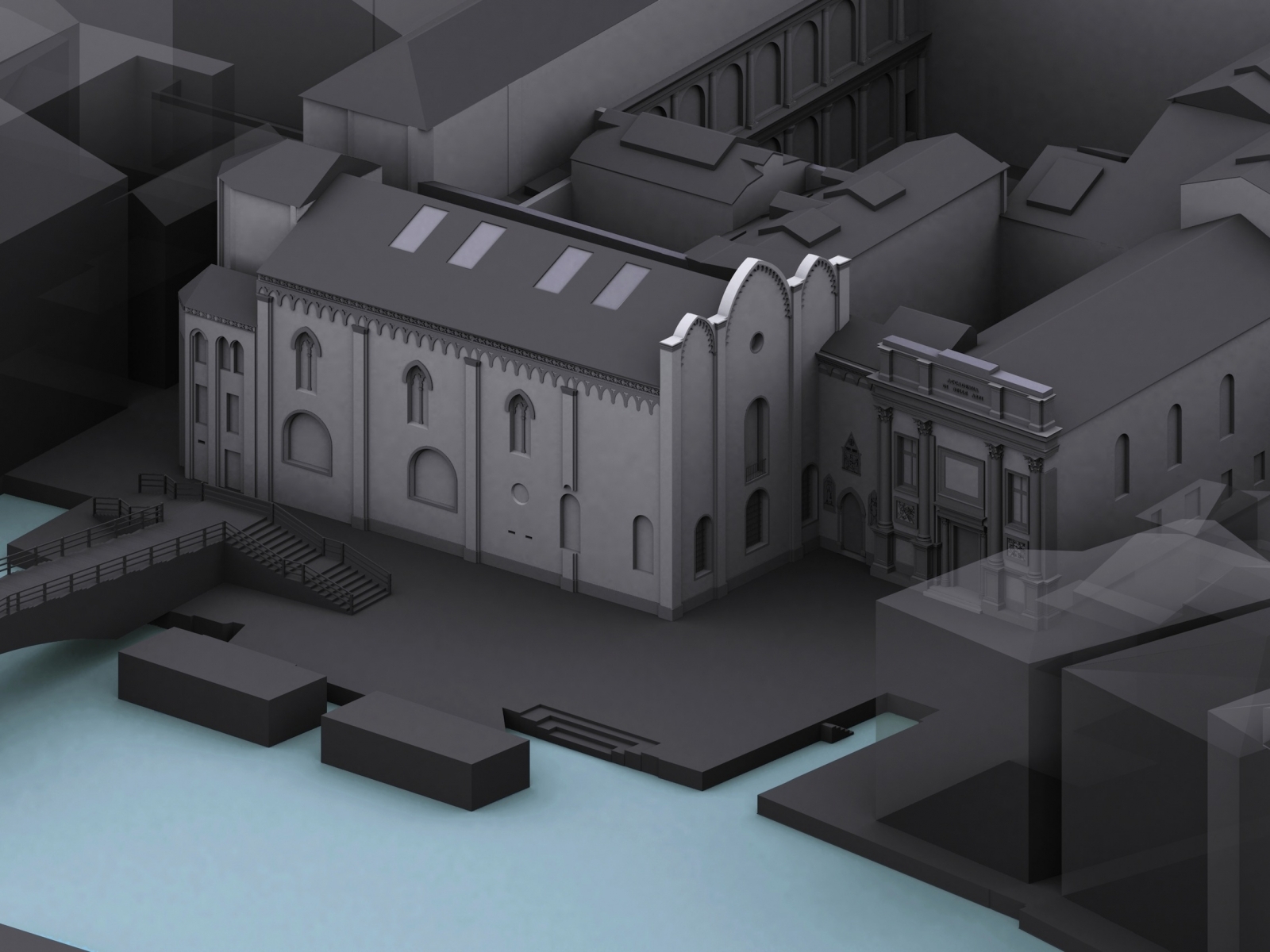
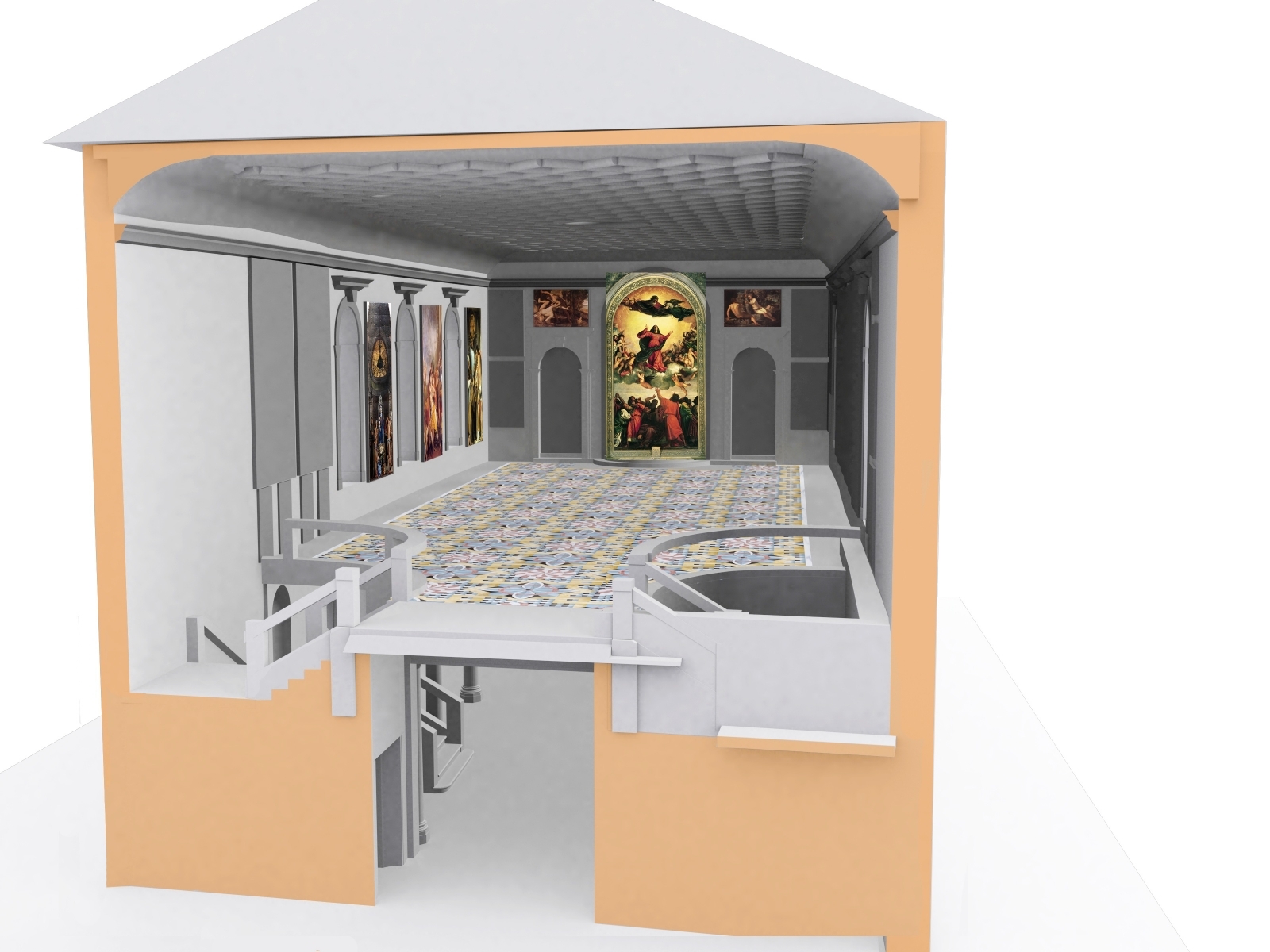
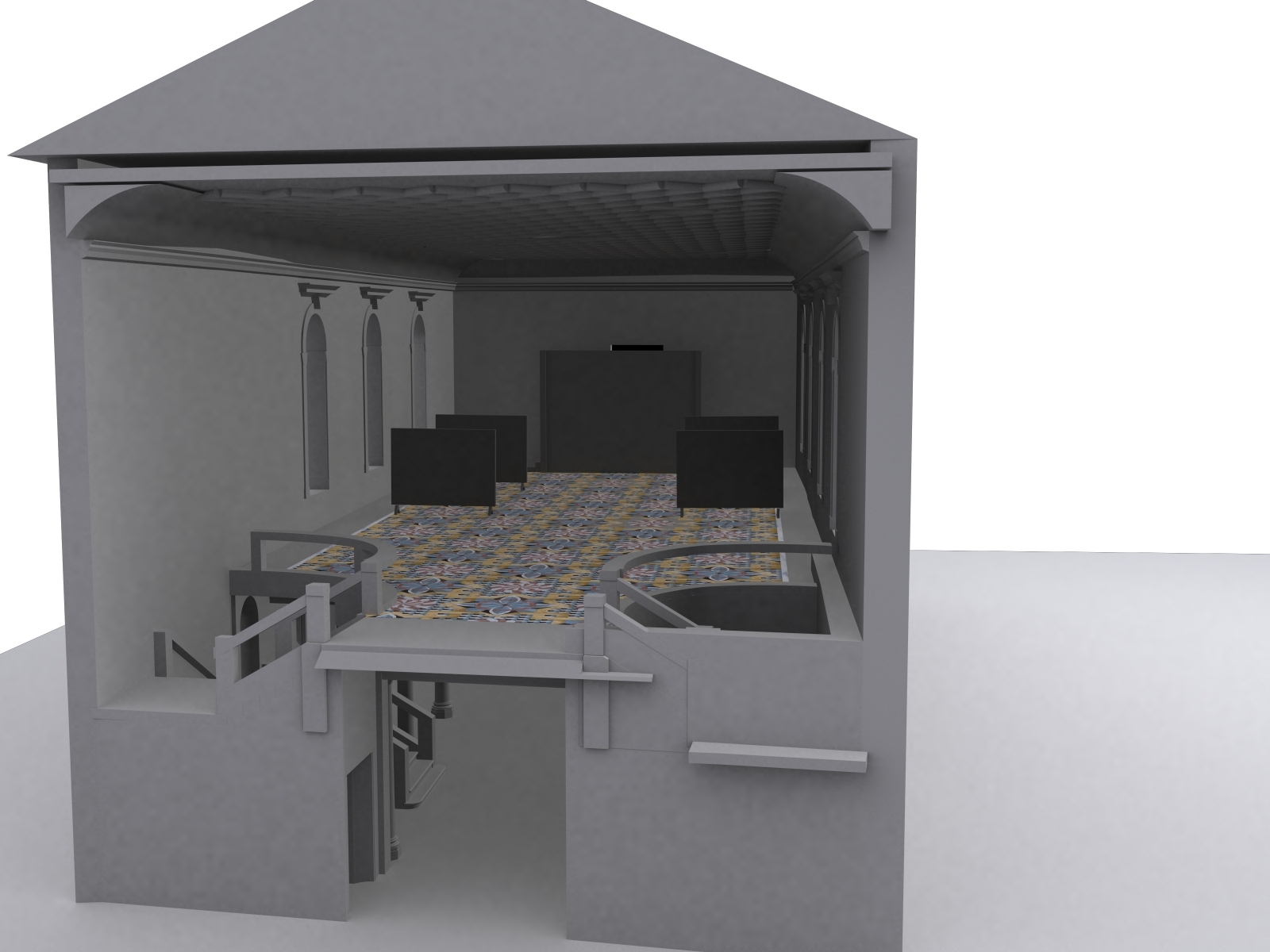
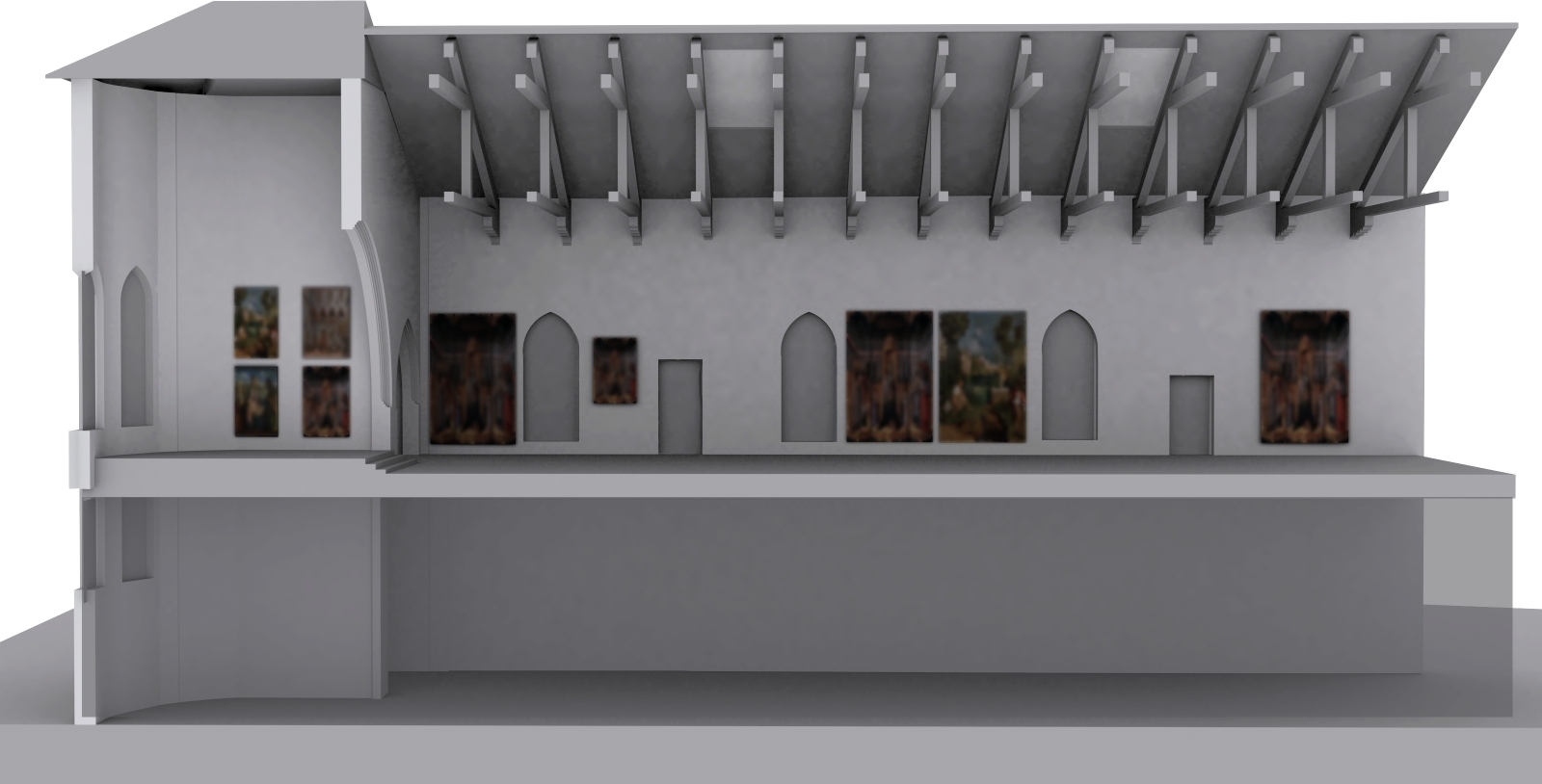
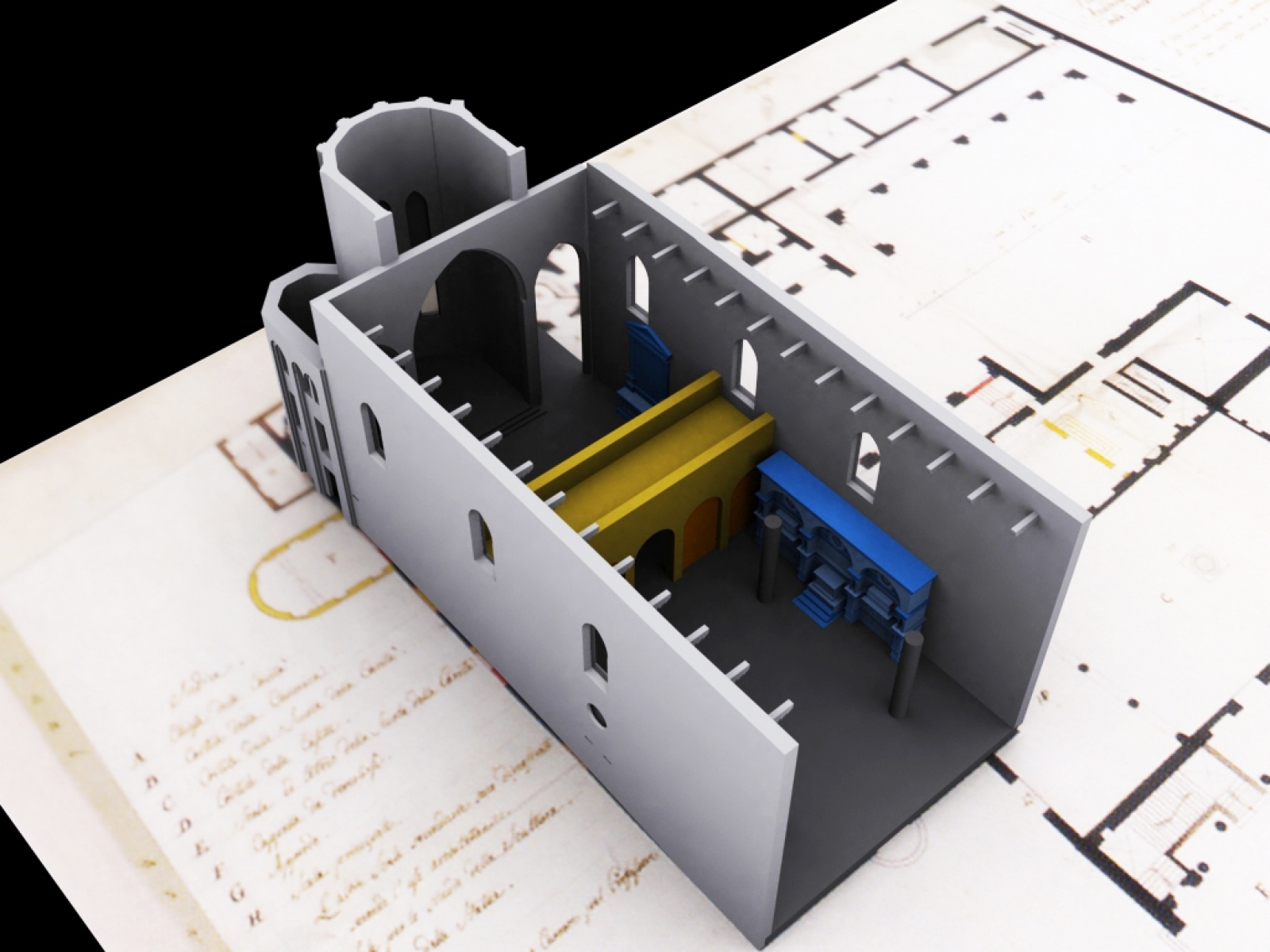
This study sought to reconstruct the history and the original vocations of the buildings that now make up the Gallerie. The first goal was to establish the architectural configuration of the buildings in each of the most important phases of the monumental complex’s transformation, focusing, in particular, on their layout and use prior to 1807. The most emblematic case is the church, which, in 1811, was split horizontally and vertically, and is now part of the museum even if its interior design (its apse) is hardly perceptible to visitors. With respect to the complex after its allocation to the Accademia, the aim was to reconstruct the way in which the buildings had been redefined and, in particular, the criteria with which the works were displayed over the years.
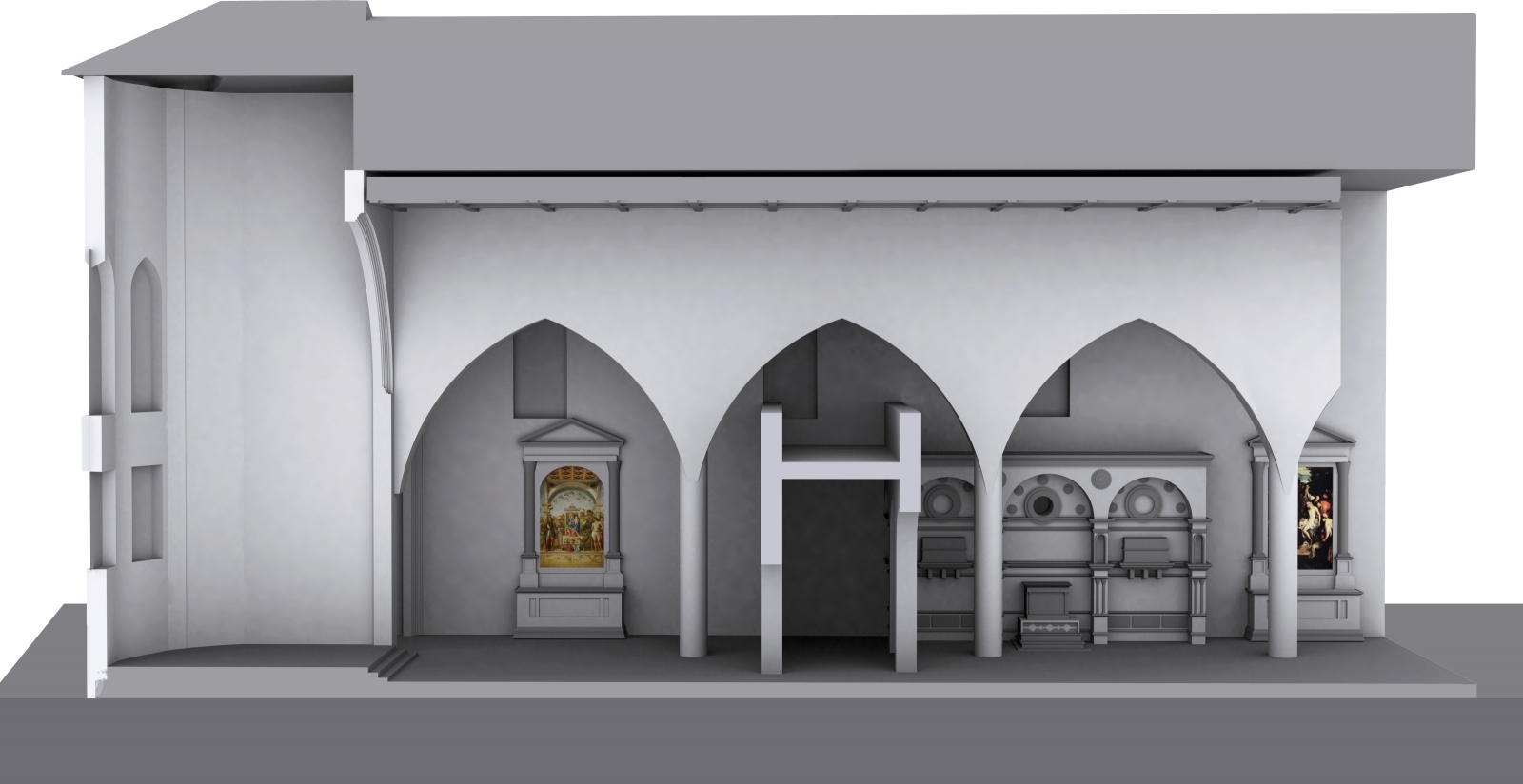
The major transformations of the building exteriors were visualized in 2D and 3D, making it possible to understand their original physiognomy and change over time. The same was done for the interiors, focusing, in particular, on a 3D model of the interior of the church before and after 1811, showing the works of art as they had been placed, and a 3D model of the sala capitolare before and after 1822, with particular emphasis on the architecture. It was also possible to reconstruct the plan (2D) of the galleries designed by Carlo Scarpa (1950–53), which was only partially carried out.
PEOPLE
2012
Elena Svalduz (team coordinator)
Isabella di Lenardo
Iara Dundas
Ludovica Galeazzo
Elisabeth Narkin
Marco Pedron
Joseph Williams